Tiara Zhan'e Hernandez
[email protected]
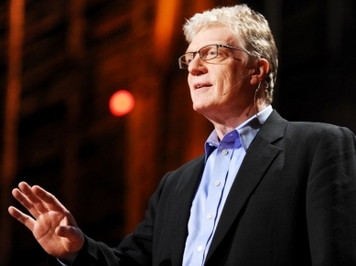 Photo via Ted.com
 In a 2006 video recording of Sir Ken Robinson, he speaks about the school system and how it often stifles creativity, mainly in children. Robinson also describes how the purpose of education for as long as he could remember has been to prepare people for the future. Education has been the gateway to the “ideal life” that everyone wants and looks forward to.
However, Robinson also states that while humans have this incredible amount of undiscovered creativity, we on the other hand don’t have the ability to look into the future and see what’s to come. But we still have kept the same hierarchy order of education which includes first and “most importantly” mathematics and sciences, followed by languages, then humanities, and finally the arts.
In most public schools music, art, and dance aren’t taken as seri- ous as mathematics and language arts. In many cases when a school faces a budget problem the first thing to get cut is generally the arts.
Is self-expression and creativity not as important as history and mathematics?
Public education often encourages us to not take music and dance seriously if we don’t plan on becoming some incredibly known dancer or a musician, which always seems to be “very unlikely.” But still, we’re expected to study mathematics and explore history text books as if we all wish to become professors and historians.
Later in the video, Sir Robinson briefly discusses a book he’s been working on, “Epiphany.” In this book, Robinson introduces a number of people he has inter- viewed and documented exactly how they found their creative sides.
One woman, by the name of Jillian Lynn, told her story about how when she was younger her teachers told her mother that something was wrong with her because she didn’t focus on mathematics and reading like she should.
Assuming something was wrong with young Lynn, her mother took her to a specialist. The doctor listened as Lynn’s mother explained Lynn’s difficulty focusing in school. The doctor took note, the entire time Lynn sat at on her hands.
When Lynn’s mother was done describing her daughter’s “learn- ing problems” the doctor asked her to step out of the room with him to talk. Before he walked out he turned on his radio.
From the outside of the room, the doctor and Lynn’s mother watched her dance around the room to the music. It was then when Lynn’s mother discovered that the girl wasn’t slow, she didn’t need medication to focus, she was simply a dancer and she needed to be in an environment that allowed her to express her creative side. Lynn’s mother took her to a dance school after that.
Today, Jillian Lynn is a very accomplished dancer. She is also credited with many successful theater productions.
While academics are important, is it okay to stop someone from expressing themselves and being happy by doing what they desire, even if it doesn’t include academics?
How supportive is Penn State when it comes to student’s creative interests and self-expression?
Although Penn State is not a fine arts school, students should still be allowed and even encouraged to express their creativity.
Do students have equal access to sports facilities, art studios, and music rooms or is it all about academics?
A likely response could be “go to an art school if you want to practice fine arts” but how many times have you walked into a high school or college that didn’t have a gym or offer a variety of sports?
Don’t worry, I`ll wait.
However, Robinson also states that while humans have this incredible amount of undiscovered creativity, we on the other hand don’t have the ability to look into the future and see what’s to come. But we still have kept the same hierarchy order of education which includes first and “most importantly” mathematics and sciences, followed by languages, then humanities, and finally the arts.
In most public schools music, art, and dance aren’t taken as seri- ous as mathematics and language arts. In many cases when a school faces a budget problem the first thing to get cut is generally the arts.
Is self-expression and creativity not as important as history and mathematics?
Public education often encourages us to not take music and dance seriously if we don’t plan on becoming some incredibly known dancer or a musician, which always seems to be “very unlikely.” But still, we’re expected to study mathematics and explore history text books as if we all wish to become professors and historians.
Later in the video, Sir Robinson briefly discusses a book he’s been working on, “Epiphany.” In this book, Robinson introduces a number of people he has inter- viewed and documented exactly how they found their creative sides.
One woman, by the name of Jillian Lynn, told her story about how when she was younger her teachers told her mother that something was wrong with her because she didn’t focus on mathematics and reading like she should.
Assuming something was wrong with young Lynn, her mother took her to a specialist. The doctor listened as Lynn’s mother explained Lynn’s difficulty focusing in school. The doctor took note, the entire time Lynn sat at on her hands.
When Lynn’s mother was done describing her daughter’s “learn- ing problems” the doctor asked her to step out of the room with him to talk. Before he walked out he turned on his radio.
From the outside of the room, the doctor and Lynn’s mother watched her dance around the room to the music. It was then when Lynn’s mother discovered that the girl wasn’t slow, she didn’t need medication to focus, she was simply a dancer and she needed to be in an environment that allowed her to express her creative side. Lynn’s mother took her to a dance school after that.
Today, Jillian Lynn is a very accomplished dancer. She is also credited with many successful theater productions.
While academics are important, is it okay to stop someone from expressing themselves and being happy by doing what they desire, even if it doesn’t include academics?
How supportive is Penn State when it comes to student’s creative interests and self-expression?
Although Penn State is not a fine arts school, students should still be allowed and even encouraged to express their creativity.
Do students have equal access to sports facilities, art studios, and music rooms or is it all about academics?
A likely response could be “go to an art school if you want to practice fine arts” but how many times have you walked into a high school or college that didn’t have a gym or offer a variety of sports?
Don’t worry, I`ll wait.
